Laundry hub
ClosetsPlanning guideIdeas and layouts

Closet Laundry Room Ideas

A laundry closet needs the same jobs as a full room, compressed into vertical space: supplies, airflow, sound control, and a place to set items down.

Cost status

Use dated local quotes

Planning scope

apartments / condos / hallways

Laundry closet with stacked machines and vertical storage.
Illustrative planning image; not a documented HomeNook installation.

Design moves that matter first

These are the choices that change how the room works before decor enters the conversation.

Stack machines when possible.

Use doors that do not block machine access.

Add a side tower or pull-out shelf for supplies.

Keep ventilation and service panels reachable.

Practical guide

Use this as the planning checklist before buying cabinets, tile, storage, or appliances.

1

Choose the right door

Compare bifold, sliding, pocket, hinged, or removable screens by their full movement envelope, hallway width, appliance access, ventilation requirements, and construction constraints.

  • Avoid doors that hit open washer doors.
  • Use louvered doors when ventilation is required.
  • Remove doors entirely if the closet can be styled cleanly.
2

Use the side gap

Most closet laundry areas have a narrow side gap. A rolling caddy, broom holder, or slim shelving tower turns it into useful storage.

  • Measure the gap after hoses and vents are installed.
  • Use a cart with raised edges for bottles.
  • Keep heavy supplies low so the cart does not tip.
3

Control noise and vibration

Closet machines sit close to living areas. Level appliances carefully, use vibration pads, and avoid loose decorative items that rattle.

  • Use anti-vibration pads under machines.
  • Keep shelves secure and avoid glass-heavy styling.
  • Install a leak pan when code or apartment rules require it.

Find matching solution types by job

Compare generic categories by room job, then verify dimensions and requirements with the supplier you choose.

Solution-type finder

Compare neutral storage and work-zone categories. These are not current products, rankings, prices, or stock listings.

Room job

Wall rail + hooks

drying

Adds air-dry storage without taking floor space.

Measure the available zone and verify fixing, service, and installation requirements with the selected supplier.
Shallow floating shelf kit

shelving

Creates daily detergent storage over side-by-side machines.

Measure the available zone and verify fixing, service, and installation requirements with the selected supplier.
Tall utility cabinet

cabinets

Hides mops, bulk detergent, pet supplies, and overflow products.

Measure the available zone and verify fixing, service, and installation requirements with the selected supplier.
Apron-front utility sink

sink

Creates a soaking and cleaning zone with strong visual character.

Measure the available zone and verify fixing, service, and installation requirements with the selected supplier.
Matching woven basket set

organization

Groups towels, rags, dryer supplies, and refills on open shelves.

Measure the available zone and verify fixing, service, and installation requirements with the selected supplier.
Counter bridge over machines

countertops

Adds a folding station and turns machines into a finished work wall.

Measure the available zone and verify fixing, service, and installation requirements with the selected supplier.

Gallery references

Filter by small space, storage, style, or layout to compare visual directions.

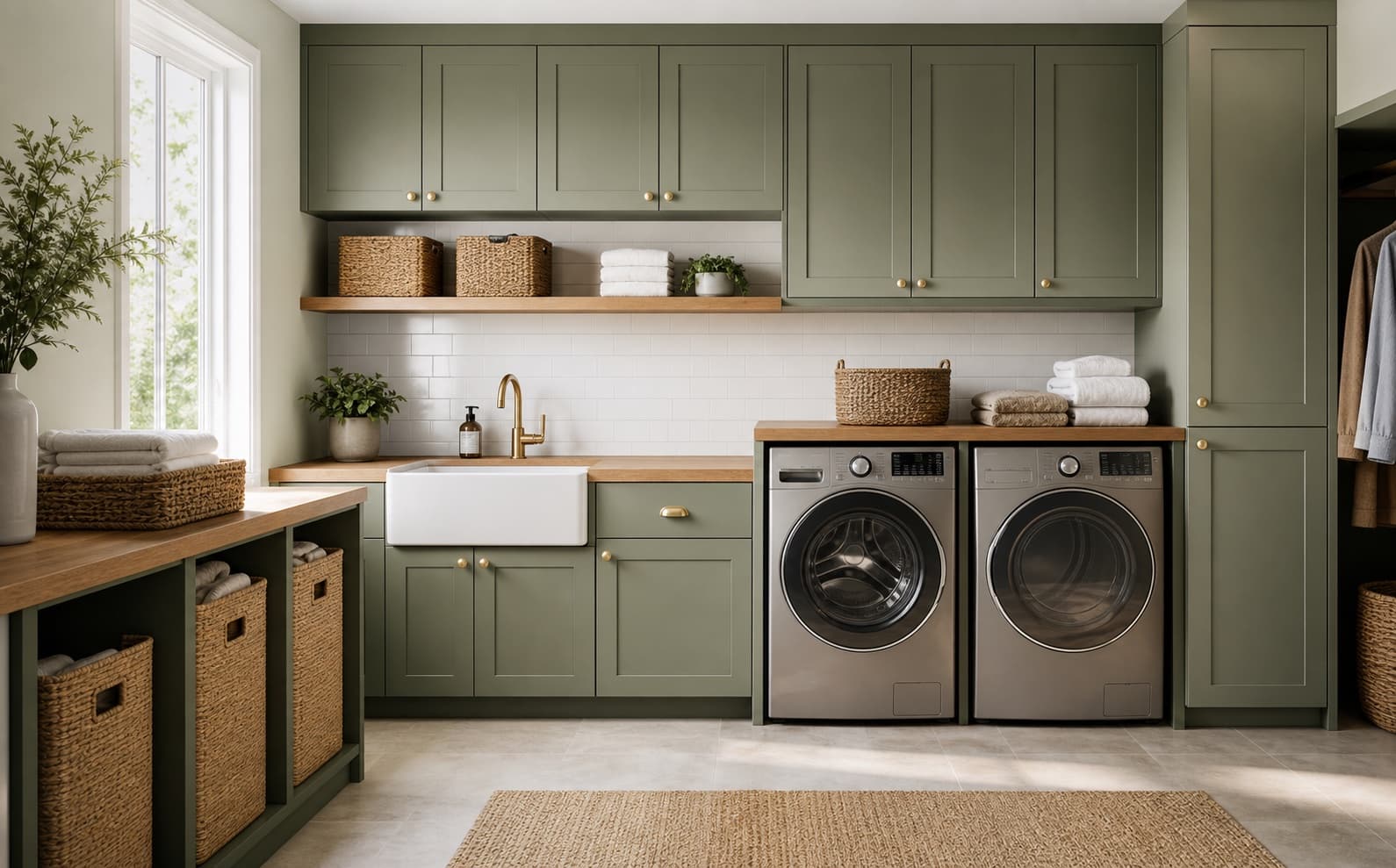
Sage green laundry room with utility sink, cabinetry, storage baskets, and washer dryer.
Sage cabinet utility room

Illustrative direction for a full wall with sink, side-by-side appliances, and upper storage.

mediummoderncabinets
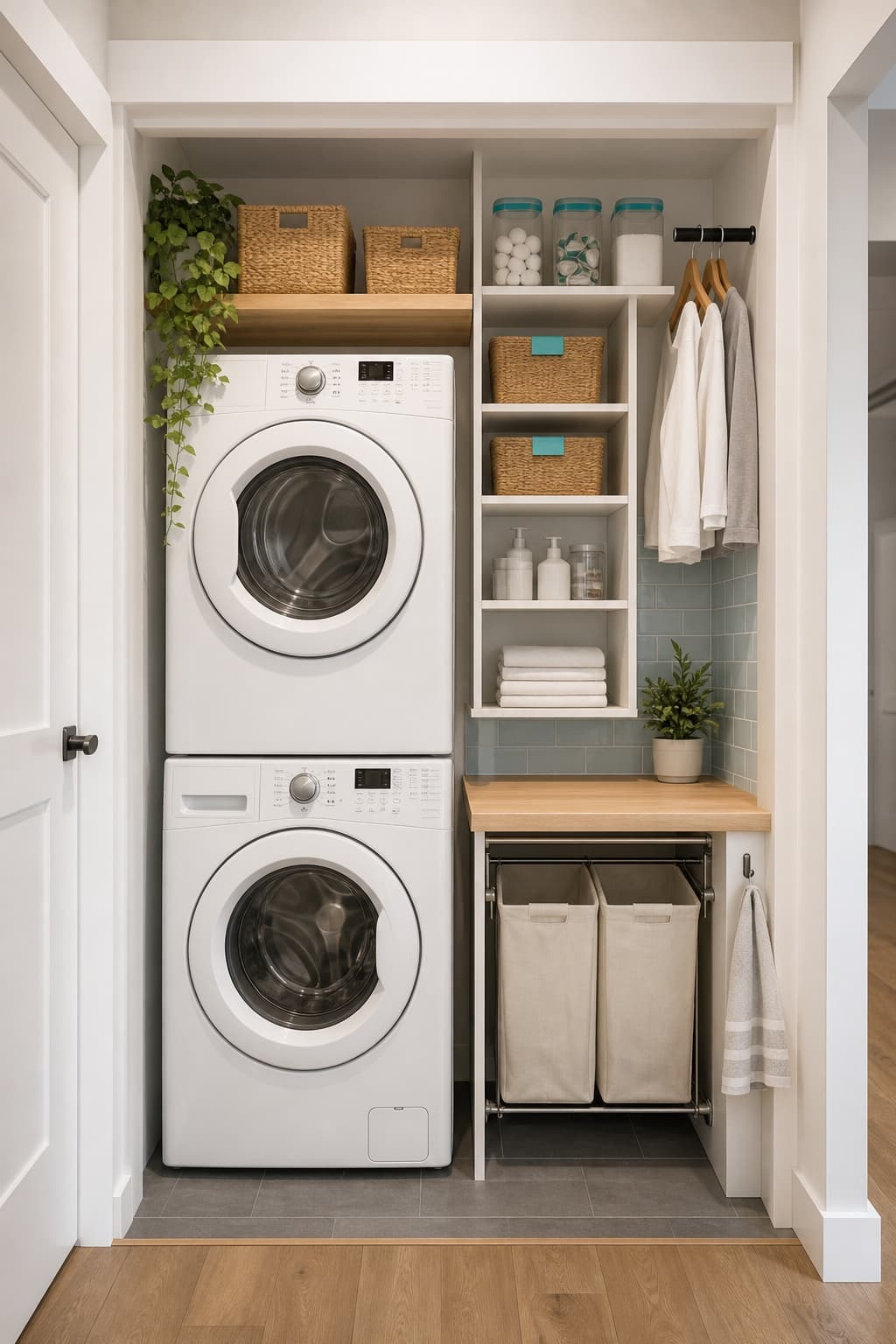
Small laundry closet with stacked washer dryer, vertical shelves, hanging rail, and compact counter.
Small stacked laundry closet

Illustrative direction for apartments, hallway closets, and narrow utility nooks.

smallminimalistsmall
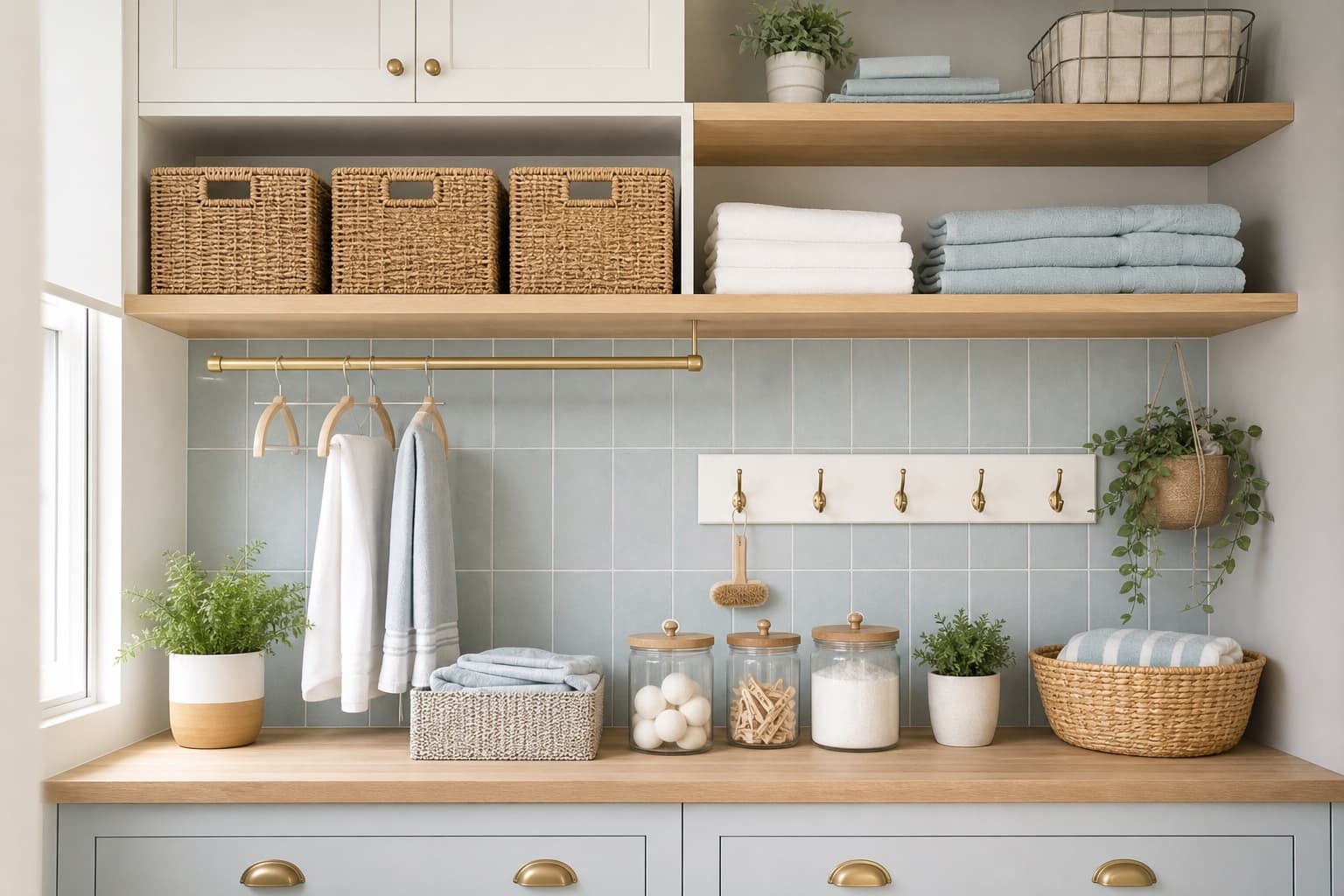
Laundry room storage wall with shelves, baskets, hooks, glass jars, towels, and folding counter.
Open shelf storage wall

Illustrative direction for keeping daily supplies, towels, and hanging zones visible but ordered.

mediummodernstorage
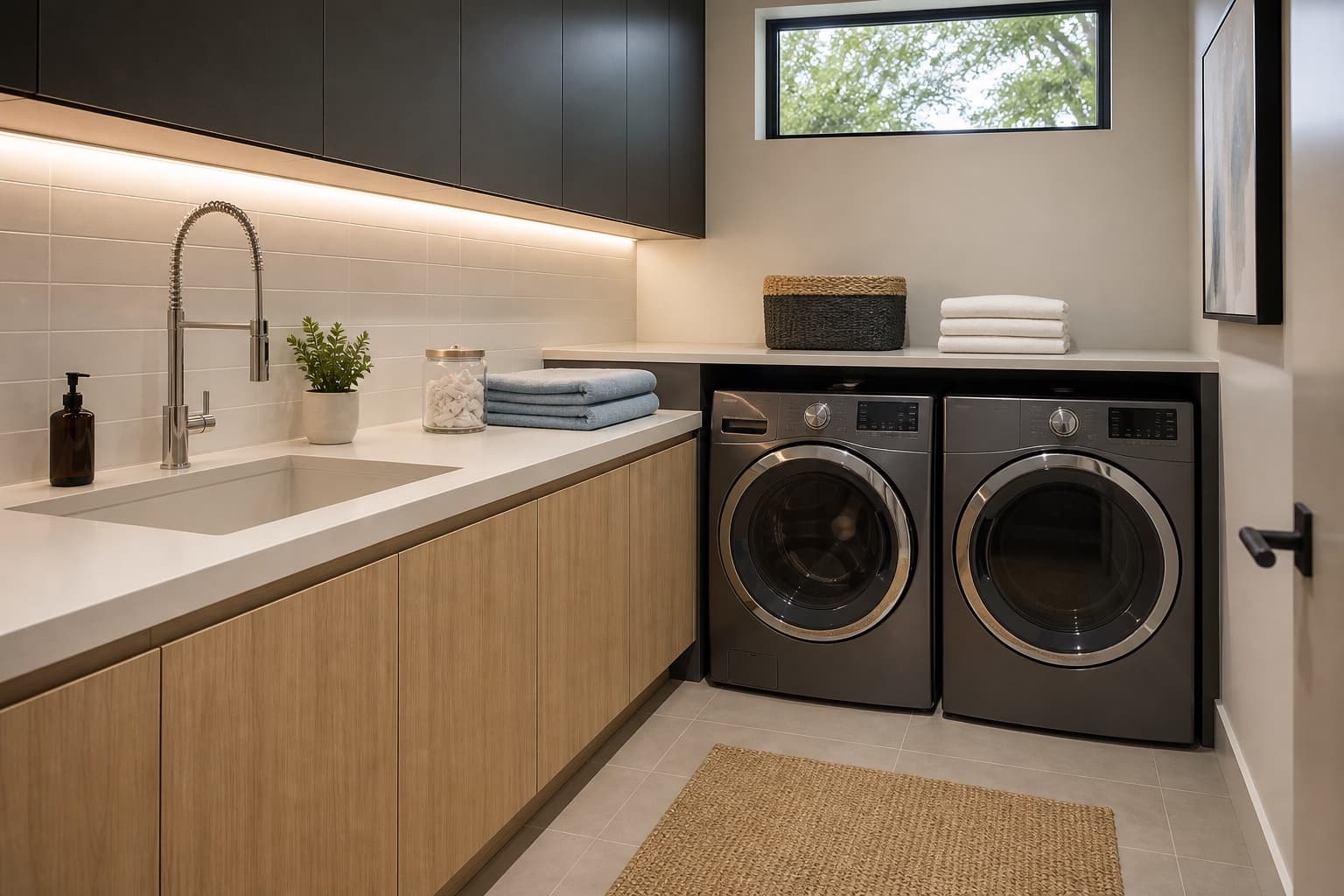
Modern laundry room with flat panel cabinets, sink, appliances, countertop, and under-cabinet lighting.
Modern flat-panel laundry room

Illustrative direction for a quiet, minimal utility room with integrated storage.

mediummodernsink
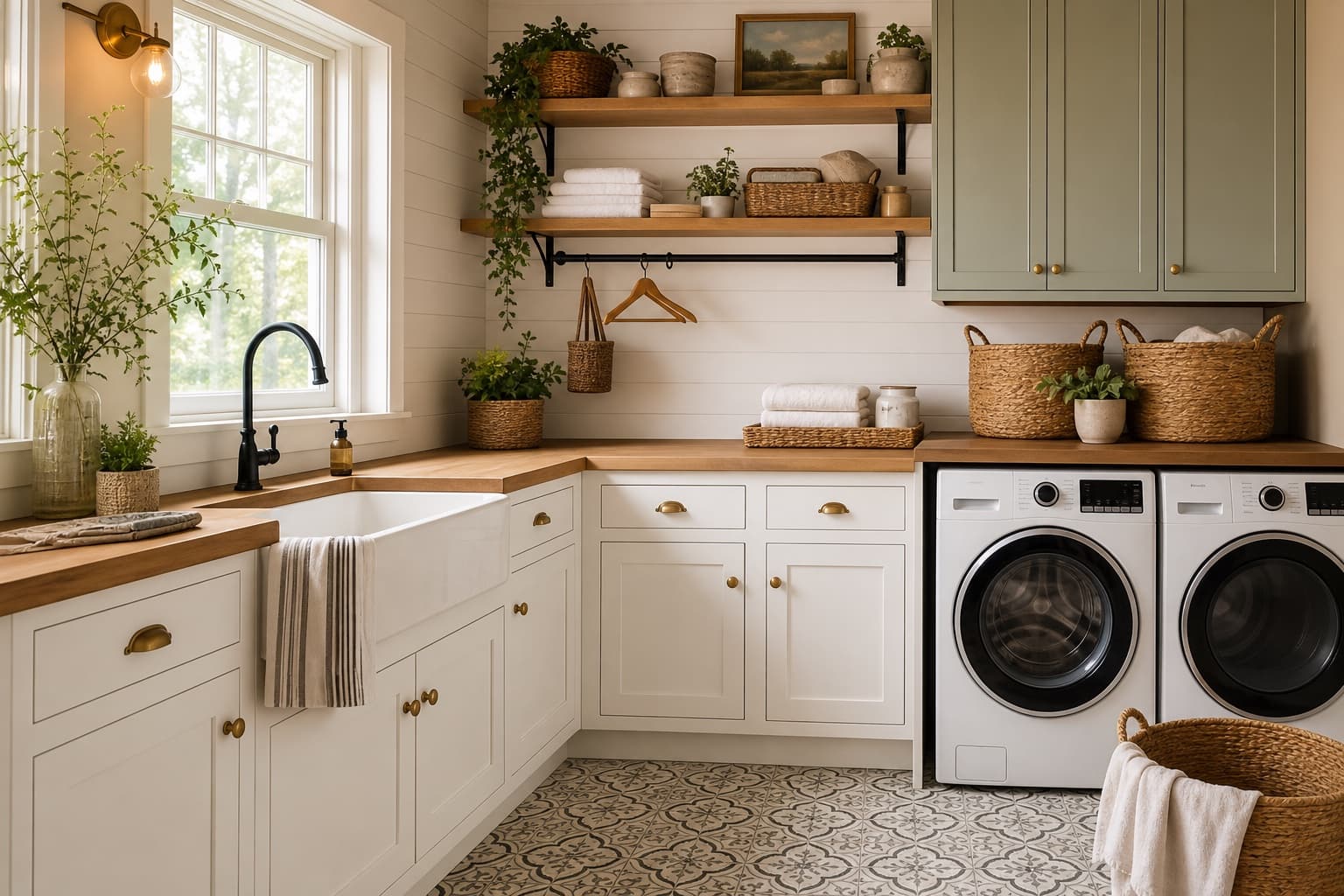
Farmhouse laundry room with apron-front sink, white cabinets, wood counter, baskets, and tile floor.
Farmhouse laundry sink wall

Illustrative direction for warm storage, apron sinks, hooks, and patterned flooring.

largefarmhousesink
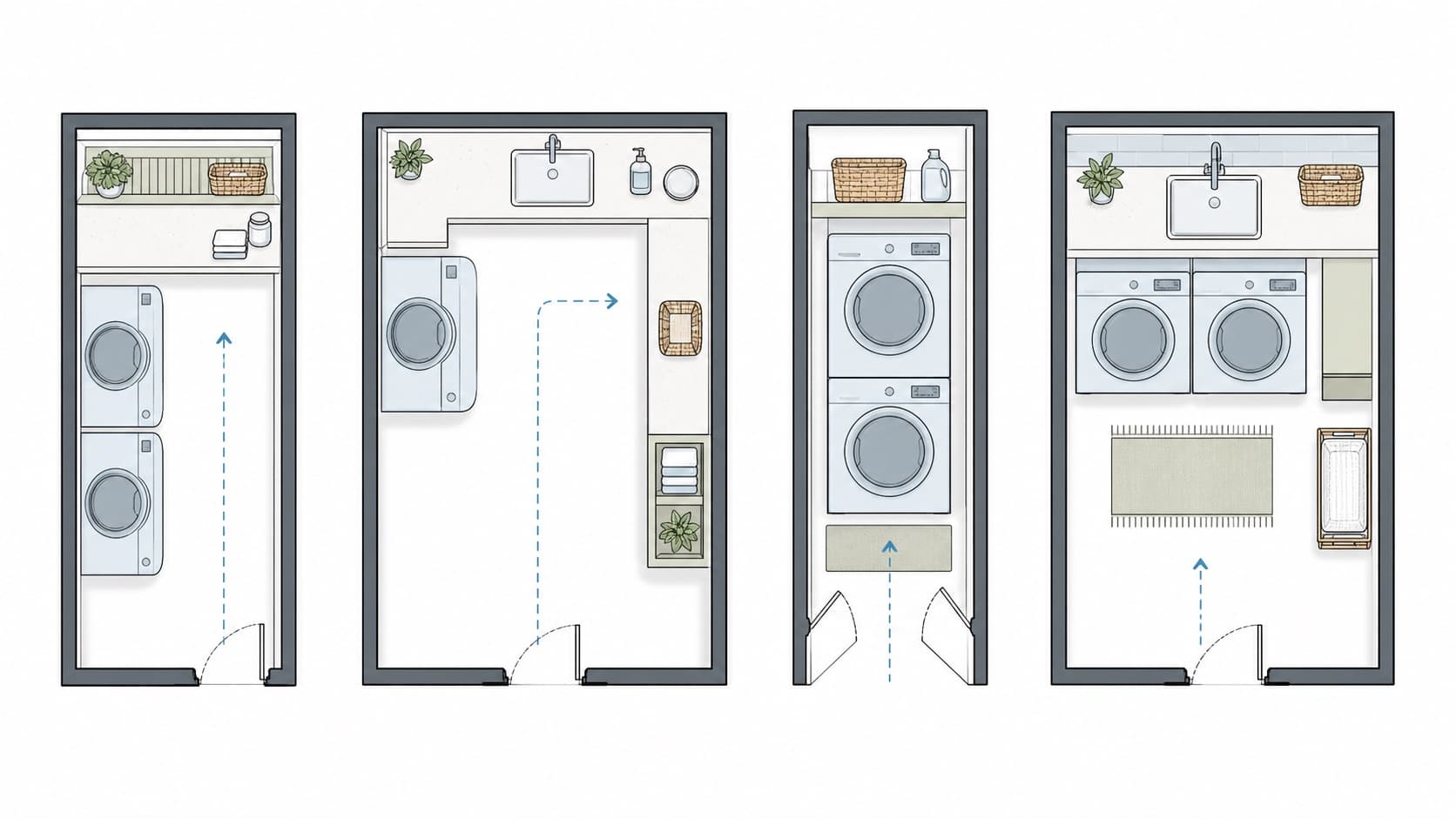
Four laundry room floor-plan diagrams for galley, L-shaped, closet stack, and side-by-side layouts.
Four layout planning diagrams

Illustrative diagrams for comparing appliance placement before measuring cabinets.

allplannerlayouts

Enclosed-space scenario

A footprint fit does not resolve an enclosed installation

Who this is for

For someone measuring a closet or cupboard where doors, connections, access, and model-specific enclosure requirements can change the result.

Evidence boundary

  • The scenario is not evidence that two appliances can be installed in any 1,500 mm opening.
  • Door construction, combustion or ventilation conditions, utility work, structure, and local rules remain outside this 2D example.

Reproducible worked scenario

Worked example: two 620 mm-wide footprints in a 1,500 mm opening

Illustrative · not a case study

Illustrative inputs only: 1,500 − 620 − 620 leaves 260 mm unallocated across the opening. That arithmetic does not allocate side gaps, trim, hoses, venting, door hardware, or service access.

Worked example: two 620 mm-wide footprints in a 1,500 mm openingPlan drawing of an illustrative 1500 by 900 millimetre envelope. Lettered shapes correspond to the legend below.ILLUSTRATIVE INPUTS · MILLIMETRES1,500 mm width900 mm depthABCDDiagram scales the entered example values; it does not establish a recommended clearance.

Measured plan: example inputs only

  • A. Appliance one · 620 × 700 mm
  • B. Appliance two · 620 × 700 mm
  • C. Door or track zone · 1,500 × 120 mm
  • D. Rear services · unknown

Constraint table

Checks, illustrative inputs, worked results, and evidence needed for Worked example: two 620 mm-wide footprints in a 1,500 mm opening
CheckExample input—not a standardWorked resultEvidence needed
Opening-width arithmetic1,500 − 620 − 620 mm260 mm remains unallocated; no side-gap conclusion follows.Measure the clear opening after trim and exact widest product points.
Door hardware120 mm example track zoneReserved in the drawing rather than treated as free depth.Replace with the actual leaf, track, hinge, handle, and approach.
Rear servicesNot suppliedUnknown blocks a validated depth result.Use model-specific connection and vent drawings.
Enclosure conditionsCloset construction unspecifiedNo ventilation, fire, or installation approval is claimed.Follow the exact manuals, local requirements, and qualified advice.

Official method references

These sources define their own scope; they do not turn the fictional inputs above into universal standards. Method links reviewed 17 July 2026.

Next action

Replace every example value and keep unresolved inputs visible.

Model the closet constraints

Validate this guide against your room

Carry the guide into the full planner, where openings, services, obstacles, access zones, and exact manufacturer assumptions stay visible.

Measurement handoff

Open the dimensional planner.

No measurements or assumptions transfer from this guide. The planner opens its clearly labelled editable example so you can replace the room, appliance, opening, service, obstacle, and desired-zone values yourself.

Open the full laundry planner

Common questions

Short answers for the planning decisions people usually make on this page.

Related laundry guides

Continue planning the adjacent storage, style, or layout decision.